
Arcetix / Building startup
Building the company behind the product.
As CEO and co-founder of Arcetix, I worked across engineering, sales, marketing, and product direction. Building an AI testing product meant staying close to customers, deciding what to build next, and using AI throughout the work of building the company.
- Role
- CEO & Co-founder
- Stack
- TypeScript · Rust · React
01 / Overview
A founder’s role across the whole company.
I was the CEO and co-founder of Arcetix. My responsibilities covered both the product and the business around it: engineering, sales, marketing, pitches, interviews, and conversations with lawyers. I moved between building the software, explaining it to potential customers, and handling the practical work of running the company.
That breadth was central to the role. I needed to understand what people wanted from the product, communicate why it mattered, and decide where we should spend our time. Product direction and company leadership were part of the same day-to-day work.
02 / Challenge
Make repeatable testing accessible without writing scripts.
The initial idea was simple: describe what you want to test, let an AI agent run it, and schedule it to run again several times a day or throughout the week. The challenge was turning that idea into a product people could use in their everyday QA work.
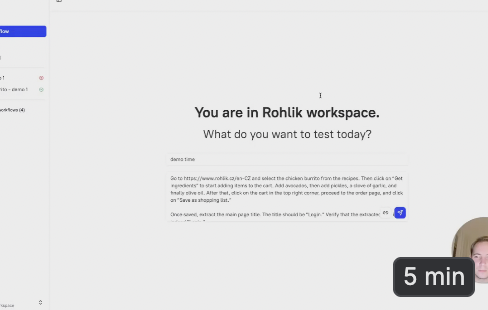
We wanted to reduce the effort involved in creating and repeating tests. Instead of requiring someone to translate every requirement into test code, Arcetix would use a URL and a plain-language prompt to create an executable workflow. Customer feedback helped us decide which parts of that experience needed attention first.
03 / Customers
Customer conversations were part of the daily work.
I spoke with customers almost every day, sometimes several times in a day. Those conversations gave us a steady stream of feedback about the product and the problems people wanted us to solve. I also conducted interviews and used those discussions to inform our understanding of customer needs.
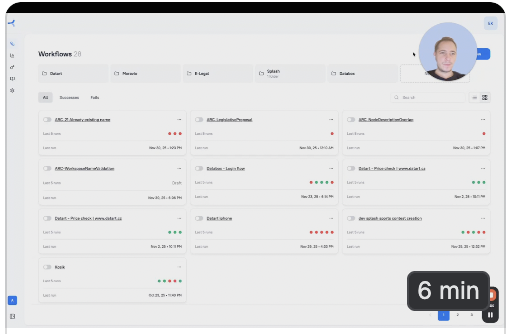
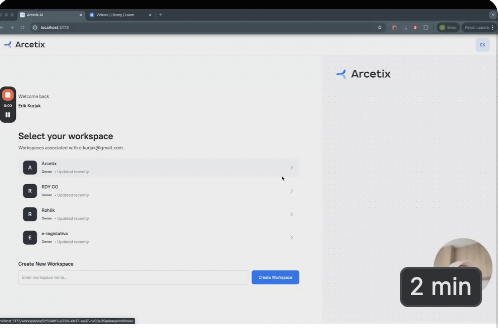
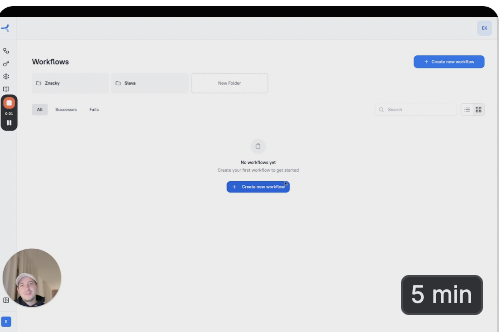
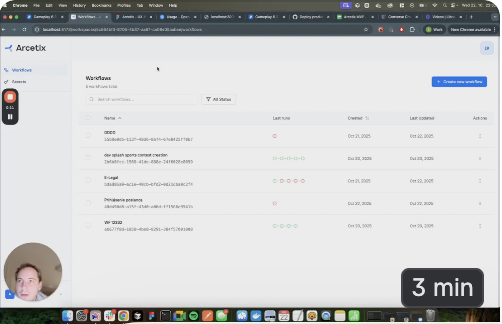
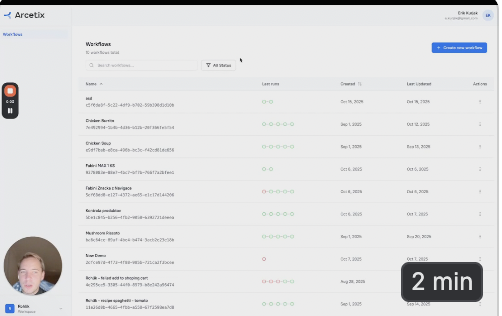
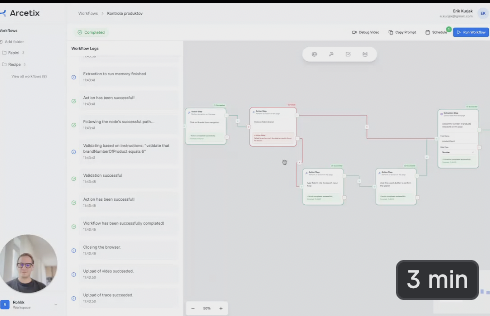
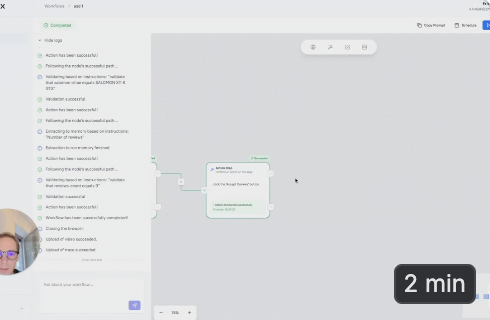
I recorded many Loom videos to explain the product, walk through individual features, and support sales conversations. Making those videos was part of how I introduced Arcetix to potential customers and showed what the product could do.
04 / Priorities
Deciding what to build first.
We received a lot of feedback from users and from the incubator. One of my main responsibilities was deciding what to do with it: which needs to address first, which features to prioritize, and which ideas would have to wait.
Gathering feedback was only part of the work. I had to turn it into a clear direction for the product and make decisions about what we would actually build next. That meant connecting the conversations outside the product with the engineering work inside it.
05 / Company building
Building, explaining, and selling the product.
Alongside engineering, I took responsibility for sales and marketing. I worked on pitches, explained the product in interviews and customer conversations, and created feature walkthroughs. I also spoke with lawyers as part of handling the company’s legal work.
The role required me to keep moving between different kinds of work. A product decision could lead to an engineering task, a customer discussion, or a change in how I presented Arcetix. I was responsible for carrying that context across the business.
06 / Working with AI
AI throughout the company-building process.
I built the company with AI as a core part of how I worked. It was central to the way I approached building Arcetix, as well as to the product itself. I used Claude Code and Codex alongside the rest of the engineering workflow, using them to explore implementations, review decisions, and move from an idea to a working product increment.
I also worked with RAG strategies and structured prompting techniques to give AI the right context, keep responses grounded in the product, and make the output repeatable. That meant thinking about what information the system needed, how to retrieve it, and how to turn a broad request into a precise engineering or product task.
That also meant keeping up with changes in AI. I made a continuous effort to understand new developments and consider what they meant for our work. Staying informed, building the product, and deciding where to focus were ongoing parts of my role as founder.
07 / Product
From a plain-language prompt to a running test.
Arcetix is a no-code AI testing platform for web applications. A user provides a URL and describes what they want to test. The product turns that context into a workflow with concrete steps, allowing teams to create end-to-end tests without writing test scripts.
An AI agent executes the workflow, checks results, and can extract and store data for later validation. Teams can schedule repeated runs and receive reports, making the product useful for recurring checks as well as individual test sessions. The workflow dashboard brings tests together with their recent run history and success or failure status.
My responsibility was to connect these capabilities with what customers actually needed. I worked on the engineering, decided which feedback should shape the next iteration, and used product walkthroughs and sales conversations to explain how Arcetix could fit into a team’s existing QA work.


